
All episodes Episode 9 of 26
Australian Air Born Wind Energy Bought by Google
Makani Power — a Sydney engineer's kite-based turbine, built from a forgotten 1970s paper — gets bought by Google.
Timeline to Success
Saul Griffith an Engineering PhD from Sydney co founded Makani power in 2006 with two others Don Montague and Corwin Hardham who has sadly passed away. It was kick started with a grant from Google’s Renewable Energy Cheaper than Coal fund (Rec).
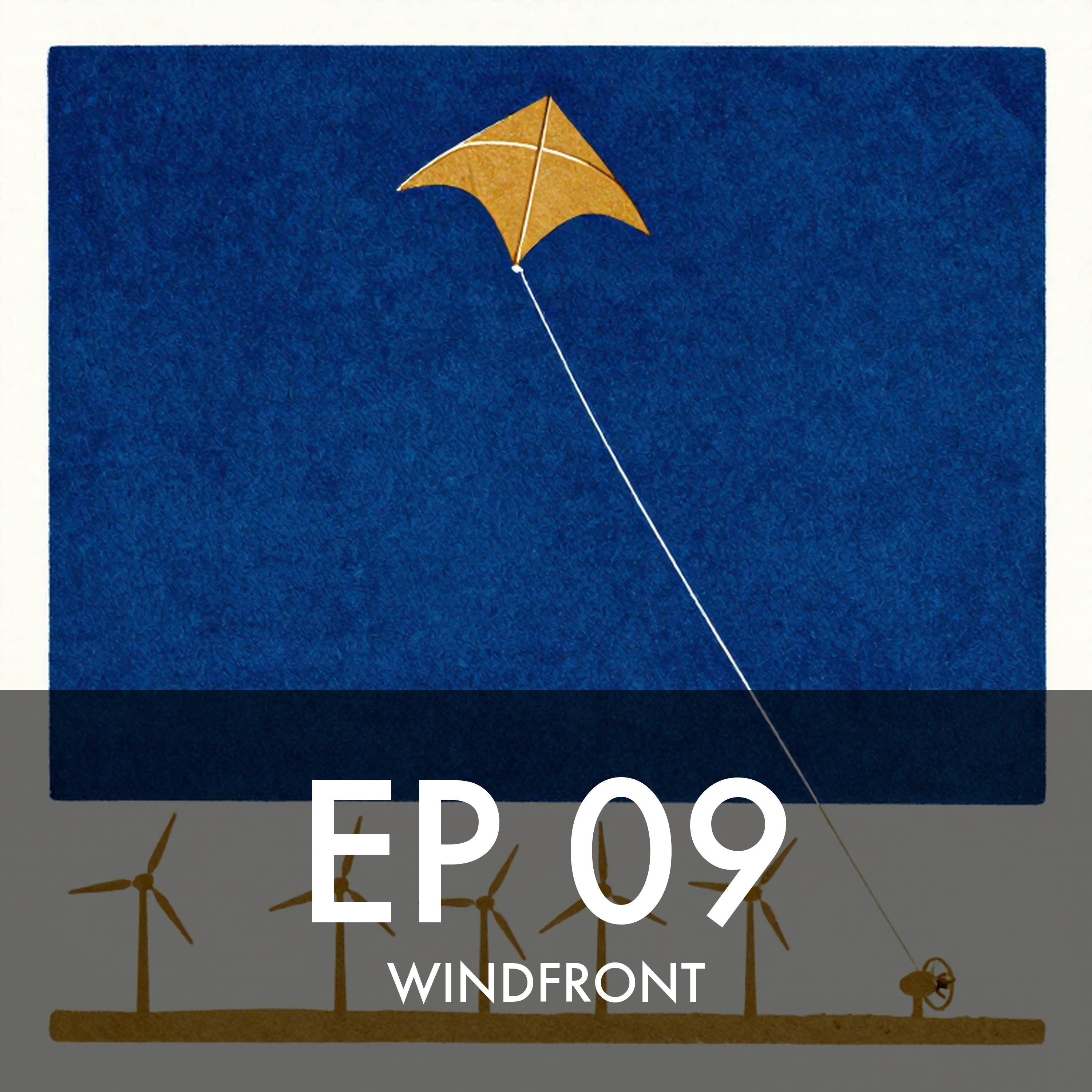
They set out to take a new approach to wind. They based their tech on a little known paper written in the 70s that described a new method for getting power from the wind, using a kite.
According to Saul’s presentation at a TED talk, a free flying wing will sweep through more air in the same amount of time than a traditional turbine blade generating greater energy output.
He talks about the limit to the height of traditional masts being unable to extend much further, though the higher you go the more wind you get.
Saul moved on in 2008, but by 2013, they’d managed to build a 30kW prototype model that was capable of hours of unmanned flight. The small generators are located on the wing itself, and transfered to the ground by a tethered cord.
It wasn’t disclosed how much Google paid, but they’d already put over $15m into the business thus far. Their initial goal was to be cost competitive with traditional wind, since the Google acquisition it’s unclear whether or not they are continuing in that same direction.
Could you see 6MW turbines with wings the size of the spruce goose flying over offshore locations in Australia?
Mentioned in this podcast:
The top wind farms
- Macathur: $1.9M
- Lake Bonney II: $860k
- Waubra: $750k
Read the transcript
Transcribed from the recording by machine, then edited for punctuation and paragraphing. Names, figures and misheard words have been corrected where the original show notes or the rest of the series settle them; anything they could not settle is left as spoken, rough patches and all.
Hi there, I’m Jervis Whitley. Today is Friday, ninth of August, and you’re listening to WindFront, the weekly roundup of the wind industry from Australia and around the world. Today, I’ll cover the weekly top three earners, and an Australian airborne wind energy company that was being bought by Google.
Now, 1st let’s catch up on a recent acquisition by Google of a new wind technology that’s been developed initially by an Australian. Saul Griffith, an engineering PhD from Sydney, he co-founded Makani Power in 2006 with 2 co-founders, Don Montague, and Corwin Hardham, who has sadly passed away. It was kickstarted with a grant from Google’s Renewable Energy Cheaper than Coal fund, REC. And now they took a new approach to wind power. They based their tech on a little known paper written in the 70s that described a method for getting power from the wind, using a kite. Now, according to Saul’s presentation at a TED talk, it was a free flying wing, a free flying wing will sweep through more air in the same amount of time than a traditional turbine blade, and thus generating greater energy output. Now, apparently the wing tip is where the majority of the energy is produced in the wind turbine. In fact, up to 75% of the energy can be generated from that last 25% of the blade, apparently. So this free flying wing, which you must see this video that I’ve linked to below, on the page, it pretty much only carves out the area that would have been carved out by the tip of a traditional blade, whereas the centre is free space where the air would flow through, the wing itself carves through a circle around about the 25% last tip of a traditional wind blade. And he talks about the limit to the height of traditional masts being unable to extend much further. But the higher you go, the more wind you get and the more power. Now, these kites run on a really long tether and can get to extraordinarily high heights, and reaching very strong winds, and consistent winds at that level.
Now, Saul moved on in 2008, but by 2013, they’d managed to build a 30 kilowatt prototype model, and it was capable of hours of unmanned flight. The way it worked was it had small generators located on the wing itself, which generated electricity and transferred to the ground by a tethered power cord. There’s a video of the flight attached to on this blog, as well as Saul’s TED talk that he gave.
Now, it wasn’t disclosed how much Google paid, but they were already in for over $15 million, having invested in a small seed type round and a venture sort of capital amount of about $1 million as well. So they were already in for quite a lot. But it wasn’t disclosed how much they paid for the company itself. But it’s understood that they are still working on the technology now inside of Google itself. And their initial goal was to be cost competitive with traditional wind. And since the Google acquisition, it’s unclear whether or not they are continuing in that same direction to be cost competitive with traditional wind, or if they’re going to apply that technology to a new purpose. Now one question that I have from this is, could you see a 6 megawatt turbine wing, the size of a spruce goose, flying over offshore locations in Australia?
Now for the top 3 wind farms this week. Now, Macarthur, smashing all records so far, since I’ve been measuring it, almost just under $2 million in a week, huge. Lake Bonney II and Waubra following it up for a massive week in wind.
So that’s it for this week. Check out the video of this new wind power type that’s quite powered wind. It’s really quite impressive to see, the links on the blog. And until I see you next time, keep buying those green electrons.