
All episodes Episode 26 of 26
Australian Wind and a new wind technology
AEMO's Statement of Opportunities update on which wind projects are actually committed, plus Sheer Wind's hexagonal funnel turbine.
Changes in Australian wind farms
AEMO has released an update to the Statement of Opportunities that describes changes in new generator project commitments. Check it out on the link below.
Sheer Wind technology
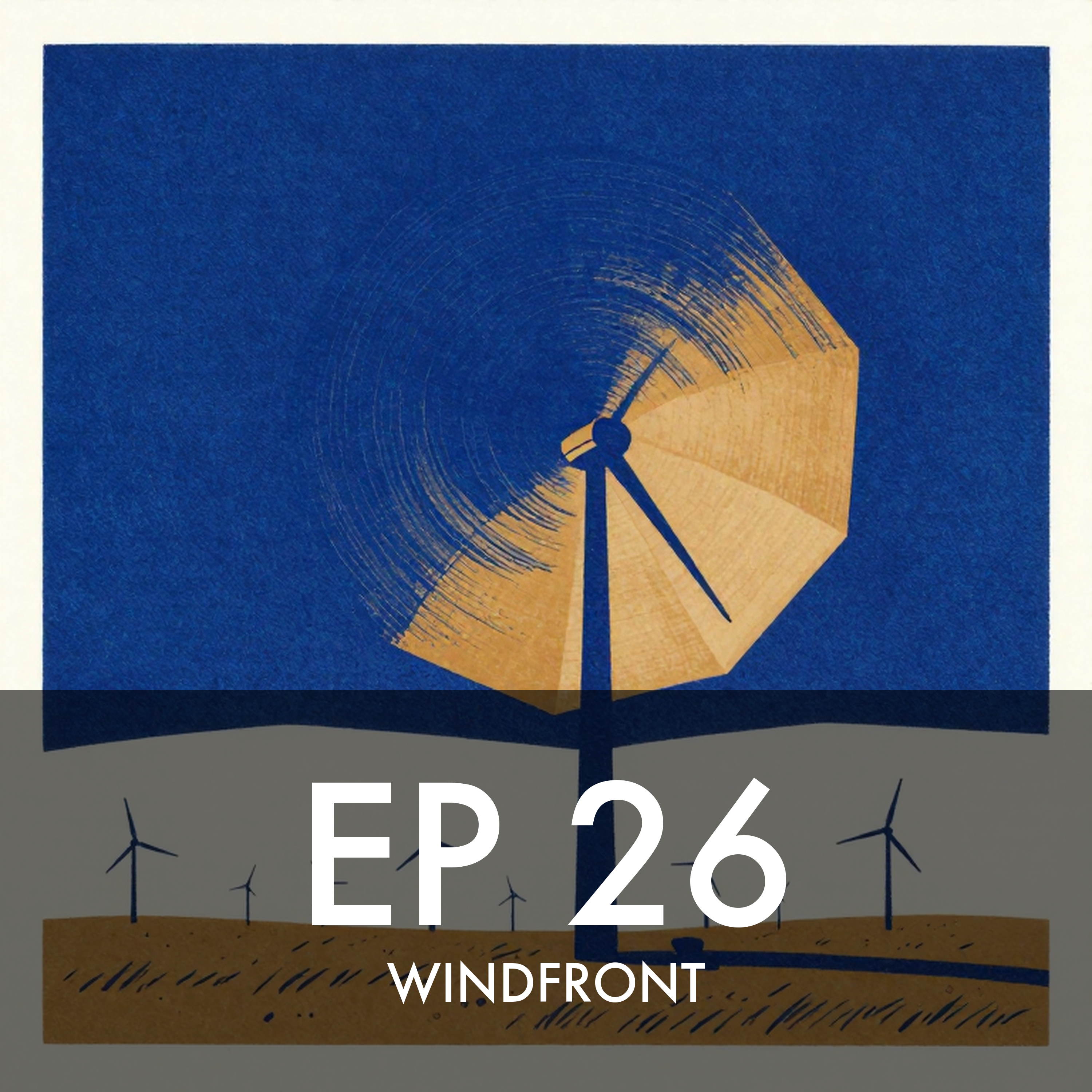
A hexagonal shaped funnel designed to speed up wind into a turbine located at the tail of the funnel. Claims to be economically viable without subsidy.
Mentioned In this Podcast
Top 3 in wind
- Waubra Wind Farm: $1.1M
- North Brown Hill Wind Farm: $1.1M
- Hallett 1 Wind Farm: $0.9M
Read the transcript
Transcribed from the recording by machine, then edited for punctuation and paragraphing. Names, figures and misheard words have been corrected where the original show notes or the rest of the series settle them; anything they could not settle is left as spoken, rough patches and all.
Hi, today is Friday, 6th of December, and you’re listening to WindFront, the weekly roundup of the Wind Industry from Australia and around the world. So now let’s look at some of the new wind farms that are being developed in Australia. I’ll also look at the new technology for wind, like a new wind technology that’s been developed in the US, and I’ll take another look at the top earners. It’s back for this week.
So last month, AEMO released an update to their statement of opportunities. A statement of opportunities is a snapshot of the Australian market, where it sort of looks at the supply demand and different things like that. And in their update, they’ve mentioned a few of the different projects that are going around in terms of wind in Australia. So we’ve got, there’s a solar farm, .one megawatt that was completed in New South Wales, and Taralga Wind Farm, which is 106 megawatt in ACT, which is a committed project. There’s a huge wind farm going up in South Australia, 390 megawatts, has been announced, a Palmer wind farm. There was a solar plant, 1.5 megawatt that was completed in July. It says it was semi-scheduled, but I can’t find their DUID listed, so I’m not sure what their outputs are actually, it would be interesting to see how much they’re actually producing.
So that’s a quick wrap up of what’s changing in wind. The interesting thing I’ve talked about before is as more and more wind gets put into some of these high wind areas, we’ll find that probably some constraints will begin to be applied to these wind farms and they may not. So on the one hand, the person who’s doing the business study may find there’s a high wind area, and theoretically the wind farm could produce, say, you know, 30 to 40% of their capacity. However, once you consider the glut of wind farms that are in that area, it just, the system can’t support that amount of wind or that amount of generation in general. And they may find it difficult to actually export the energy they’re producing and be constrained for some of the time. So it’d be interesting to see how that happens in the future.
So perhaps the windiest area may not be the best place for the wind farm, and you may need to take into account other areas which are remote from these high wind areas, but have a better opportunity to export into the grid. It would be interesting to see if that is a factor already that people decide upon when they’re locating wind farms. So if anyone knows anything about that, it’d be interesting to have a chat with you about it on the show.
Now, a new technology that came across my desk was by a research group in the US, Sheer Wind. It’s like a, I guess, the best description of it, if you can click the link, I’ve got a link in the blog post, but it looks like a huge hexagonal funnel, where the wind goes into the top of the funnel, and it gets pushed down into a very small narrow throat, which would speed the wind up and then channelled through a turbine generator, and then exhausted at the end. And their claim is that you can have wind speeds as low as 2 miles per hour, which is around about 3 k an hour, which is very low wind speed. And it would take that low wind and be able to produce an amount of energy from it. But it may be interesting for remote locations and things like that. They make some interesting claims about the cost of the technology, claiming that it costs less than a cent per kilowatt hour to run and the capital cost they claim is less than $750 per kilowatt.
Now, finally, let’s have a look at the weekly top 3 earners. This week, we’ve got Waubra out on top on 1.1 million, followed by North Brown Hill, also on 1.1, and Hallett. Macarthur, all the way down in the pack this week, falling far behind.
Well, that’s it for me this week. Until I see you next time, keep buying those green electrons.