
All episodes Episode 14 of 26
Wind Power - From under the sea
MIT's Alex Slocum wants to anchor floating offshore turbines with hollow 30m concrete spheres — pumped storage, anchor and artificial reef in one.
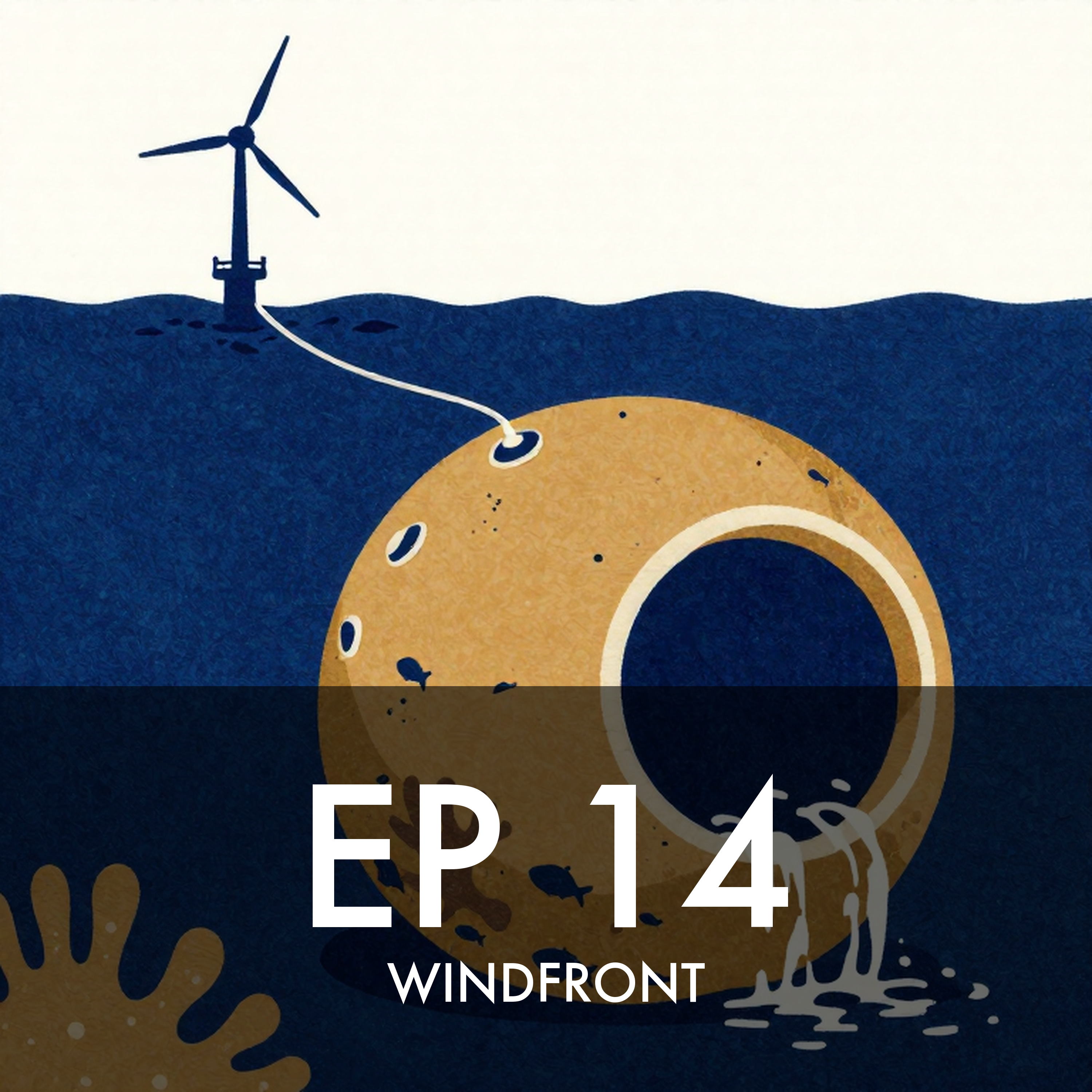
Off shore storage in the most unlikely of places
We’re often told that wind, solar and other renewables are lacking the consistant power producing capability that is required for stable power supply.
If the wind doesn’t blow and the sun doesn’t shine, then we don’t get any power. There have been plenty of proposals to plug the gap with grid scale energy storage.
Molten salt energy storage in the case of some solar towers. Wide spread Electric Vehicles storing all of our energy needs. Huge battery banks, and even compressed air storage in natural underground caves have all been listed as potential solutions.
Today I’ll speak about one more that has been added to the list, but we’ll have to go under the sea to find it.
Alex Slocum from MIT has published a paper outlining a method for storing the power produced by offshore wind turbines. He proposes that huge 30m diameter dome or ball shaped concrete structures are built as an anchor for floating off-shore wind turbines. Inside the ball would be hollow, and could slowly be pumped dry of water. Then when energy is required and wind is low, water is allowed back in and rushes past a turbine which produces electricity.
This concept most likely falls squarely in the camp of pumped storage. We already have that in Australia and it’s efficiency can be around 70%. What is novel, is that the ball would serve multiple purposes. Apart from energy storage, it would be the anchor for the wind turbine, and serve as an artificial reef for wildlife.
So while the turbine blades are busy killing seagulls above, the marine life are given a new home underneath.
Professor Slocum’s research is only in early days yet. There have not been any commercial test pilots built.
Mentioned in this podcast
The top wind farms
- Macathur: $926k
- Lake Bonney II: $574k
- North Brown Hill: $489k
Read the transcript
Transcribed from the recording by machine, then edited for punctuation and paragraphing. Names, figures and misheard words have been corrected where the original show notes or the rest of the series settle them; anything they could not settle is left as spoken, rough patches and all.
Hi, I’m Jervis Whitley. Today is Friday, 13th September, and you’re listening to WindFront, the weekly roundup of the wind industry from Australia and around the world. Today, I’ll take you through the weekly top three, and then I’ll look at a novel new wind storage under the sea. The top 3 earners in wind this week are Macarthur, Lake Bonney and North Brown Hill, Macarthur at $920,000 much further down from its heady heights of $2 million in a week.
So now let’s have a look at wind storage. We’re often told that wind, solar and other renewables are lacking the consistent power producing capability that is required for stable power supply. If the wind doesn’t blow and the sun doesn’t shine, then we don’t get any power. There’ve been plenty of proposals to plug the gap with grid scale energy storage, molten salt energy storage in the case of some solar towers, widespread electric vehicles storing all of our energy needs, huge battery banks, and even compressed air storage in natural underground caves have all been listed as potential solutions. But today I’m going to speak about one more that has been added to the list, but we’ll have to go under the sea to find it.
Alex Slocum from the MIT has published a paper outlining a method for storing power produced by offshore wind turbines. He proposes that the huge 30 metre diameter dome or ball shaped concrete structures are built as an anchor for the floating offshore wind turbines. Inside the ball, it would be hollow and could slowly be pumped dry of water. Then when energy is required and the wind is low, water is allowed back in and rushes past a turbine, which produces electricity.
This concept most likely falls squarely in the camp of pumped storage. We already have that in Australia, and its efficiency can be around about 70%. What’s novel is that the ball would serve multiple purposes, apart from energy storage, it would be the anchor for the wind turbine and serve as an artificial reef for wildlife. So while the turbine blades are busy killing seagulls above, the marine life are given a new home underneath.
But don’t get too excited, Professor Slocum’s research is only in early days, there haven’t been any commercial test pilots built yet. So that’s it for WindFront this week. I’ll leave you with a question. Do we need grid scale energy supply for renewables to succeed? Will they succeed regardless? Let me know what you think. And until I see you next time, keep buying those green electrons.